Showing posts with label Spring. Show all posts

Tuesday, March 12, 2013

Inspirational Gardening Journal Planner ~ Free Printable


"She considereth a field, and buyeth it:
with the fruit of her hands she planteth a vineyard."
~ Proverbs 31:16

Spring is in the air, soil is waiting in the earth and visions of grandeur are in the hearts of those who desire to provide "food for her family" (Proverbs 31:15). To aid in this proverbial pursuit, we are sharing our garden planner printable with you. This was originally shared on our homemaking blog. Ideas for using this Regency-inspired journal are here. Simply download from the menu below and print. May your harvest be plentiful!


You may also be interested in our other (printable) organizational tools: "Good Steward Record Binder""Inspirational Recipe Book"Pantry LabelsLaundry Room Labels, and/or a Baking Basics Jar Set. Artwork for this project was provided by The Graphics FairyReading, Roses & Prose along with lovely drawings by Kate Greenaway. 


This post may be shared with some or all of the following lovely link-ups: Modest Mom Monday'sTeach Me TuesdayDomestically Divine TuesdayRaising HomemakersWise Woman Link Up, Wildcrafting Wednesdays, Simple Living Wednesdays and Deep Roots at Home. Thank you, dear ladies, for hosting these!

Monday, June 4, 2012

Flowers & Femininity ~ A Unit Study


Flowers and females are almost synonymous. There is much in the example of the flower that illustrates beautiful concepts to young ladies. Let us use these lovely plants as instruments to teach our daughters about the miracle of life, wonders of womanhood, godly relationships, purity, virtue and the love of studying God's creation. This would make a sweet summer study and even those who do not homeschool would benefit by reading some of these stories and doing a few of the activities together.

Suggested Read Aloud Title: The Basket of Flowers a Tale for the Young (This book was written in the 1700's and may be hard for younger girls to understand who haven't been introduced to classic literature. If this is the case, listen to the dramatic audio book instead: The Basket of Flowers : Lamplighter Theatre (Dramatic Audio). You won't want to miss out on this story as there are so many Biblical truths in it for our daughters.)
"Inside the pages of this rare and aged book... Mary is falsely accused of stealing, and the penalty is death. She had always been taught that it is better to die for the truth than to live for a lie-for the worst pillow to sleep on is the pillow of a guilty conscience. Will the darkest and most dreadful night help Mary find God for herself or will she live in the shadow of a faith that is not her own? This is a story that will cause you to shed a tear or two and at the same time cultivate a hope that will never disappoint!" ~ The Basket of Flowers a Tale for the Young
Alternative Read Aloud Title: If you have already read the The Basket of Flowers a Tale for the Young then I highly suggest reading The Flower of the Family by Elizabeth Prentiss. Or both!
The Flower of the Family
The Flower of the Family by Elizabeth Prentiss
Both are novels with a glorious spiritual message for our dear daughters.

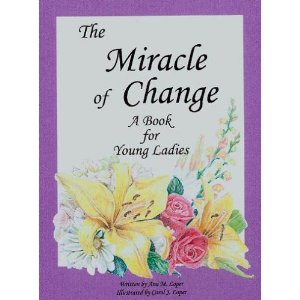
Suggested Picture Books: Flowers: Eyewitness Explorers by DK Publishing (non-ficton source for this study), The Garden Wall: A Story of Love Based on I Corinthians 13 by Jennie Bishop (a great tool to use regarding the beauty of a godly spouse and "true" love), The Miracle of Change ~ A Book for Young Ladies by Amy Loper & Miracle of Life by Amy Loper (Books which discusses the miracle of life and the changes in our bodies through the examples of flowers. Please see below for more information regarding these titles.), Hana in the Time of the Tulips by Deborah Noyes (Historical fiction picture book about the tulip craze in Holland in the 1600's.), Flower Field Guide or the use of the internet for flower identification.

Flower Inspired Activities:

I would suggest reading together for a half-hour per day from the chapter books above. Have your daughters do some of the listed activities below each day according to their abilities. Include all work from this study separately in a notebook/binder or composition book for each young lady. Don't forget to let them decorate their own covers with pictures of flowers, stickers or clip art! Encourage them to be creative. By the end of a few weeks you will have a nice collection of "Flower Scrapbooks" to cherish as an educational keepsake.

Spelling/Vocabulary List (Have students define the terms they are unfamiliar with):
  1. stamen
  2. petal
  3. sepal
  4. anther
  5. stigma
  6. perennial
  7. annual
  8. photosynthesis
  9. pollinate
  10. nectar
  11. pollen
  12. germination
Luke 12:27
Bible/Copywork/Penmanship: Have your daughter copy one verse about flowers per day from the Scriptures into her "flower scrapbook" in her best writing. Make sure she pays close attention to punctuation. This is a great time to teach her to use a Concordance or Topical Guide. Have her write the meaning of each verse below her entry. Here are some suggestions.


Science/BiologyThe Miracle of Change ~ A Book for Young Ladies by Amy Loper This book was meant to be a supplement to a series but I used it as a stand alone resource and found it very valuable in discussing the changes that young girls go through in their bodies. The illustrations are of beautiful flowers and the message is to embrace femininity and the changes that accompany it. This is a tender time and I appreciated this gentle, Christian based book (publisher's comment below). There is also the Miracle of Life which is the intended prequel and is a very basic "birds and bees" type book in which the parent must do the actual explaining once the life cycle of the flower is presented. The Miracle of Change is more in depth with body changes and is the book I highly recommend.
"A beautiful full color and tastefully illustrated hard back educational book designed to help mothers instruct their preadolescent daughters as they face the changes puberty brings. Bringing your daughters back to the flower at the age of transition to see the beauty in God's design and His plan for each blossom. This book is a delicate, yet honest look at the transformation that is coming your daughter's way. Help prepare your daughter for the miracle of change with this beautiful book that will celebrate her God-given femininity." ~The Miracle of Change ~ A Book for Young Ladies by Amy Loper
Ecclesiastes 9:8
Biblical Purity: Flowers have always been associated with different meanings. Do some research to find out which one symbolizes Christian purity. Why is it important to keep ourselves pure? Discuss this with your daughter and read some Scripture together that supports this (Titus 2:12, Matthew 5:8, 1 Corinthians 6:18, Colossians 3:5, Psalm 24:3-5, James 3:17, Psalm 51:10, Philippians 1:9-11). Create a purity page in your scrapbook. Draw a picture of the flower that depicts purity and include the pertaining Bible verses below your sketch. Have your daughter write a list of ways to keep herself pure. You may also want to take the time to read to your older daughter about Tamar here and the lesson we can learn about physical purity.
Biblical Marriage: Read the book, The Garden Wall: A Story of Love Based on I Corinthians 13 by Jennie Bishop and discuss the type of love that a true godly marriage is based upon. Have your daughter write an essay on what she is looking for in a marriage and discuss together.

Character Building/Copywork/Art: Have your daughter copy one passage a day from the The Basket of Flowers ~ a Tale for the Young regarding flowers (my favorites are here) as you are reading it. Have her illustrate each verse with the appropriate flower. You may want to check out a "how to draw a flower book" or find some instruction on the internet. Discuss the meaning of each chosen passage together.

Crown of Roses by Pierre-Auguste Renoir

Language Arts/Penmanship: Copy the following poem in your best writing making sure to use all proper punctuation. (Here is another poem about a violet that will bless this study too!)

Beauty Is Vain

While roses are so red, 
While lilies are so white, 

Shall a woman exalt her face 
Because it gives delight? 


She's not so sweet as a rose, 
A lily's straighter than she, 

And if she were as red or white 
She'd be but one of three.

Whether she flush in love's summer
Or in its winter grow pale,
Whether she flaunt her beauty
Or hide it away in a veil,
Be she red or white,
And stand she erect or bowed,
Time will win the race he runs with her 
And hide her away in a shroud.


Bible Discussion/Memory: Discuss the meaning of the poem above with your mother. Look up in the Bible what is says about vain beauty in Proverbs 31 and write the verse below the poem in your best writing. Memorize this verse.

Language Arts/Grammar: Have your daughters identify the nouns in the first paragraph of the poem. Have them identify the verbs in the second paragraph and the adjectives in the third paragraph.

Language Arts/Grammar: Discuss "homophones" with your daughters using the example of "flower" and "flour". Have your daughters think up more examples. Homophones are words that are pronounced the same but have different meanings.

Language Arts: Create your own poem about flowers.

Language Arts: Explain what an acronym is and have your daughters do one with the word FLOWER using words that describe a flower. An acronym is a word formed with the initial letters of other words such as NATO, LASER and SCUBA.

Language Arts/Literature: Have your daughters read The Secret Garden independently and do a book report on it. 

Basic Skills: Have your girls list their ten favorite flowers and then have them alphabetize it.

Spring Flowers by Pierre-Auguste Renoir

Science: Read a few pages per day from Flowers: Eyewitness Explorers by DK Publishing (or another non-fiction source) and do the activities below as they pertain to what you read.

ScienceDiagram a simple flower.

Science: Go outside and sketch some flowers. Afterwards, using a flower field guide, label the flower using its latin name and any special parts.

Science: Define a "simple" flower, a "composite" flower and a "complicated" flower.

Science: Using a dictionary, explain the difference between an "annual" plant and a "perennial" plant. Then, classify your ten favorite flowers into each of those categories. 

Science: Try propagating a plant (an easy one is a geranium) using a cutting. There is more information here on my sister site.

Science/Research: Research the different ways that flowers are pollinated and write a short summary about it.

Discarded Roses by Pierre Auguste-Renoir

Science/Research/Health: Choose five flowers that have medicinal purposes and make a chart which explains how each one can benefit humans and how to prepare it.

Science/Geography: Just like different animals will be found in different habitats, so is the case with flowers. Make a list of showing the flowers you would find in a tropical area, woodland area, grassland, desert, marshland and mountainous area.

Geography/Research: Using a blank map of the United States, label each state (using initials) along with its state flower (do five or so a day).

Geography/Research: Write a short report on your state flower (and don't forget to include the type of care they require and in what climate they thrive in, etc.)

Flowers in a Vase by Pierre-Auguste Renoir
Home Economics: Check out some books regarding flower arranging and create a bouquet for your home. Take a picture of it and place photo in your "flower scrapbook".

Home Economics: Embroider a flower onto a tea towel.

Home Economics: Research what flowers are edible and make a list. Then make a cake and decorate it with some fresh, edible flowers. Make sure to take a picture of your creation to add to your "flower scrapbook".

Home Economics: Dry some flowers by hanging a bunch upside down in a dry and airy place. Roses are a good choice since they will most likely retain their color and scent. These are fun to decorate your home with.

Home Economics: Make some potpourri using small scented flowers and petals.

Garden/Science Project: Plant a cutting garden which is basically a small garden space dedicated to flowers which are meant to be cut and placed in vases in your home. Research what kind of light and soil the flowers need and try to accommodate them.

Arts/Crafts/Service: Make some pressed flowers and then use them to decorate note cards. Send one of your homemade cards to someone who needs an encouraging word.


Art: Print out the "Flowers of the Bible" coloring pages I made with this link (see sample above) for your younger girls to color realistically, cut out, label and paste into their "flower scrapbooks".


History/Research: Read Hana in the Time of the Tulips by Deborah Noyes to your younger daughters and discuss tulipmania. You will be surprised what people paid for one of these flowers during that time! Have your daughter draw or paint a tulip. This is a very interesting moment in history. Older girls can do a report on tulipmania by doing their own independent research.

Foreign Language: Learn how to say "flower" and "plant" in the foreign language you are studying.

Girls Picking Flowers in a Meadow by Pierre-Auguste Renoir

Art History/Picture Study: Study the floral paintings on this post by the French artist, Pierre-Auguste Renoir. He was one of the leading Impressionistic painters in the 1800's. Do you know what impressionism is? It is simply painting using a series of small brush strokes so that the final product is the artist's "impression" of what they see. Capturing the light was important to them. They were mocked when they first started this style of painting. Choose a favorite picture by Renoir to do an "art review" on. Make sure to print a copy of the painting to paste onto your review in your "flower scrapbook". All the floral paintings on this post were by his hand.
Beautiful Bonding/Science/Nature: Play the Garden Game together which is a beautiful game that teaches about gardening concepts.

Field Trip/Beautiful Bonding: Pack a picnic lunch and visit a botanical garden (or one a week if you have many in your area). Make sure to include pictures of your day and paste these memories into your "flower scrapbook".

Movie: For fun, why not end this study by watching The Secret Garden together. Pop some corn and cuddle up.

Song of Solomon II-12

You may also be interested in:

Saturday, May 12, 2012

Preserving Food in Jars


Learning to preserve the bounty in a jar is easy and very rewarding. Canning is an excellent way to keep your garden year round as food for your household without taking up precious space or energy of a freezer. It is also pleasing to know that the food you are eating is fresh from the garden and without all the added pesticides and preservatives which you may find in store bought products. Canning is also very economical once you have invested in the initial supplies. A woman with a pantry full of goods has an excellent sense of accomplishment and knows that a gift for a neighbor or friend is always at hand. The Proverbs 31 woman is always learning and continually looking for new ways to bless her household. Skills such as these are excellent to pass down to the next generation for we never know what the future holds. The act of canning itself offers wonderful memories for mother and daughter.

Here is the basic information you will need to get started (these are published from my sister site):


"She looketh well to the ways of her household…"
~ Proverbs 31:27


(pictures are linked)


Friday, April 13, 2012

Keeping a Nature Journal

Buy at Art.com
Book with Rose


There are many hobbies I wish I had pursued when I was a young lady and keeping a nature journal is at the top of that list. There is so much good that can be offered to one when they take the time to capture in a few words or sketches, a glimpse of God's creation. 

It broadens your scope of knowledge in the areas of biology, enhances your appreciation of creation, enables you to view life with more detailed lenses, promotes art through drawings of nature, encourages quiet time with God and His goodness, provides peace in a stressful world, creates a legacy in which to treasure and pass down to the next generation (which in turn may encourage your daughters to begin their own).


Many thoughtful women of the past took notes on nature and we will glean from their goodness in future posts. In the meantime, let us dwell on a way to implement this into your life…
  • Procure a journal, composition book, binder in which to enter your sketches, information and observations.
  • Some quality colored pencils will enhance your artwork and entries.
  • Go outside and get comfortable. Look around and sketch what catches your attention.
  • Bring a poem book of nature or the Scriptures to add depth to a scene you are watching. Include some words that relates to what you are watching and sketching in your journal entry.
  • Another option is a field guide to identify what you are observing. You can enter the latin names and any other interesting scientific information on the subject you are observing next to your nature sketch.
  • You can also write your thoughts, personal poetry and how you view the nature scenes next to your sketches.
  • Perhaps one day you will draw a picture and include a Bible verse, another day a sketch with some pertaining poetry and another day, your own verses from the heart. Let it be a mix of sweet samples in your journal!
  • Try and discipline yourself to observe nature once a week for at least 15 minutes including one nature journal entry. You may find this time sacred to your soul and it will encourage you to continue and grow in your knowledge of the living world and the One who created it all.


Ideas on picture scenes to record:
  • Birds and their nests
  • Feathers
  • Flowers
  • Leaves
  • Trees
  • Insects


Some nature inspired books:
  • The Country Diary of an Edwardian Lady (Excellent for women of all ages to enjoy! I just love the pictures in this book.)
    • "This is a facsimile reproduction of a naturalist's diary for the year 1906. Edith Holden recorded in words and paintings the flora and fauna of the British countryside through the changing seasons of the year."
  • Pocketful of Pinecones by Karen Andreola (Excellent for mothers to promote nature study and I think older girls would appreciate this book as well. This is a personal favorite of mine and is written in a fictional story format.)
    • "Karen Andreola, renowned interpreter of the Charlotte Mason method of education, has written a unique sort of book in the homeschool world. Pocketful of Pinecones is a teacher's guide to nature study cleverly disguised as a heartwarming story written in the form of a mother's diary. Woven into the story are: More than 100 examples of what to look for on a nature walk, Latin names for the living things to observed by the characters, Study questions, Nature poems and verses."
  • Handbook of Nature Study by Anna Botsford Comstock (This is the grandaddy of nature study books but is quite in depth with information and nature study questions. This book is excellent for those who are serious about nature study.)
    • A matchless handbook for decades, this classic work has been the natural history bible for countless teachers and others who seek information about their environment. Written originally for those elementary school teachers who knew little of common plants and animals, and even less about the earth beneath their feet and the skies overhead, this book is for the most part as valid and helpful today as it was when first written in 1911-and revised in the spirit of its authors by a group of naturalists in 1939. Anna Botsford Comstock very appropriately took the view that we should know first and best the things closest to us. Only then, when we have an intimate knowledge of our neighbors, should we, journey farther afield to learn about more distant things. Teachers and children will find the material in this book invaluable in that regard. Details of the most common, but in some ways the most interesting, things are brought out, first by careful, nontechnical descriptions of the things themselves and later by thoughtful questions and study units. Because the most common things are treated in greatest detail, materials for study are easy to find. Whether the reader lives in the inner city or in the rural outback, the handbook is a treasure trove of information. A teacher does not need to know much about nature to use this handbook. The information is there for the novice and the expert alike. All that is needed is an inquiring mind, senses to observe, and a willingness to think about nature on a personal level. To enter this book in search of information about any common organism, stone, or object in the sky is to open the door to a fresh and lively acquaintance with one's environment.

Tuesday, September 27, 2011

Roses Unit Study


What female doesn't appreciate the beauty and fragrance of a rose? Why not do a thematic study on this beautiful flower with your young ladies and learn more than mere science and nature, but the growing up of a girl to a woman as likened unto a bud to a full-grown rose… (My hope is that the maidens who aren't home educated can also amuse themselves with some of the books and activities listed below.)

Literature to Read Aloud with Your Daughters: The Flower of the Family ~ A Tale of Domestic Life by Elizabeth Prentiss (This is from the author of my favorite book, Stepping Heavenward, and is full of inspiration for the journey of the young lady.) Something that really impressed me with this book is that the father is involved in his daughters' life. He gives spiritual guidance and comfort to her. This is rare to read in books these days. Here is a favorite excerpt of mine from the novel of the father encouraging his dear daughter: 
"You may be sure of one thing; God himself has placed you in your present circumstances, and it is He who appoints for you your daily task. Now, is it possible to conceive that a Being of so much wisdom and goodness would place you amid duties whose tendency is to draw you away from him, rather than towards Himself?"
The Flower of the Family
~ Elizabeth Prentiss, The Flower of the Family
I would suggest reading together for a half-hour a day from the above chapter book and having your daughters do some of the listed activities below each day according to their age and abilities. Include all work from this study separately in a notebook/binder or composition book for each young lady. Don't forget to let them decorate their own covers with pictures of roses, stickers or clip art! Encourage them to be creative.  By the end of a few weeks you will have a nice collection of "Rose Scrapbooks" to cherish as an educational and sentimental keepsake. You may print off my label above to place on your cover as a label to your scrapbook if you desire.

Rose Inspired Learning Activities

Character Building: Begin this study by reading a Beautiful Girlhood excerpt, Chapter 1, titled "Opening Flowers" to your daughters regarding roses and discuss (The above link will take you to a free online source of the chapter).

Spelling/Vocabulary: hybrid, rootstock, graft, deadhead, bare-root, dis-bud, fragrance, cane, climber (Copy words into your scrapbook and fill in definitions of unfamiliar words or phrases. Mothers may give a spelling or vocabulary test at the end of this study if she so desires to younger pupils.)

Vilmorin Rose by Pierre Joseph Redoute

Science/Nature: Draw and label the parts of a rose.

Science/Research: Using the internet or encyclopedia, research the types of roses such as a "climbing" rose, etc. and make a list. Write a short description of the type of rose next to each entry. 

Science/Research: Using the internet or encyclopedia, find out what kind of care a rose needs and write a short report on the subject. Make sure you include how much water they require, how much sunlight is needed, when the best time to plant is and what kind of soil is best.


Science Project: Plant some roses in your backyard using the information you have gathered. Take pictures of the process and include in your "scrapbook" and make sure to write captions explaining each photo.


~ Isaiah 35:1
Bible/Penmanship/Art: Copy the above verse regarding a rose from the Bible in your best writing, paying careful attention to punctuation. For extra beauty, draw a picture of a rose to include above your verse. Write the meaning of this verse on the bottom half of the page.

Language Arts/Character Building: While reading the book, The Flower of the Family ~ A Tale of Domestic Life by Elizabeth Prentiss, write down any passages in the book that really grasp your interest. When you are finished with the book, choose your favorite entry and write a short essay explaining why that verse was meaningful to you.

Language Arts/Penmanship: Copy the poem below in your best writing, paying careful attention to punctuation.
Painting by Paul de Longpre

The Rose
How fair is the rose! what a beautiful flower!
The glory of April and May:
But the leaves are beginning to fade in an hour,
And they wither and die in a day.
Yet the rose has one powerful virtue to boast,
Above all the flowers of the field!
When its leaves are all dead and fine colours are lost,
Still how sweet a perfume it will yield!
So frail is the youth and the beauty of man,
Though they bloom and look gay like the rose;
But all our fond care to preserve them is vain,
Time kills them as fast as he goes.
Then I'll not be proud of my youth and my beauty,
Since both of them wither and fade;
But gain a good name by well doing my duty:
This will scent like a rose when I'm dead.
~ Isaac Watts

Language Arts/Character Building: Write a short essay which explains what the above poem is talking about and how it could be applied to your life. Make sure to use complete sentences.

Language Arts/Creative Writing: Write your own poem about a rose. Keep careful attention to spelling and punctuation. 

GeographyLearn about what a "compass rose" is.  Print out and label one for your scrapbook or make one yourselves with this link.

Rosa centifolia foliacea by Pierre Joseph Redoute 
History: Research the life of the famous, botanical artist, Pierre Joseph Redoute and write a short report about his life and work (you will probably recognize these prints as they are widely used to decorate many commercial products). His collection of paintings titled "Les Rose" is probably still one of finest records of rose illustrations. He was nicknamed the "Raphael of Flowers" and worked as the royal flower painter for Marie Antoinette and later for Napoleon's wife, the Empress Josephine. There is a website dedicated to his life work and you can find some beautiful clip art of his work there. 

Rose Research: Find your favorite picture of a rose from Redoute and print it out and paste onto some notebook paper. Do some research on that particular rose, how it received it's name and why you chose it. You will be surprised at the variety of roses there are!

Painting by Paul de Longpre
Foreign Language: Learn how to say "rose" in the foreign language you are studying (you may need to use the internet for this).

Thinking Skills/Creating a Chart: Roses are said to have different meanings depending on the color. Research this idea and create a chart showing which color represents what.

Painting by Paul de Longpre
Home Economics/Flower Arranging: Create a rose bouquet to display in your home (you may cut from a garden or purchase some if you don't have access to a rose bush). Be sure to place in a pretty vase in a family room so everyone can enjoy it. Take a picture of your final product and include in your "rose scrapbook". The above link will give you some guidance in this "art" of flower arranging.

Rosa Canina by Otto Wilhelm Thome (rose hips)

Home Economics/Science/Research/Health/Hospitality: Research "rose hips" (aka rosa canina) and why they are so good for you. Write a short report about it and the benefits they provide for your health. Purchase some at a health food store and brew some rose hips tea for your family to be served on a pretty tray in a pretty way. Take a picture of your final product (your tea all set up) and include in your "rose scrapbook".

Painting by Paul de Longpre

Home Economics/Sewing: Sew a lovely "rose petal" sachet that you can put in your drawer for it's nice scents or to give as gifts.

Home Economics/Health/Hygiene: Make your own rose water. You may use it for it's fragrant scent or as an astringent for your skin. Remember that a young lady always take care of herself. She must be neat and tidy for she represents a maiden of God. Make sure to copy the recipe down in your "scrapbook" for future use.


Home Economics/Organization: Here is a free printable of beautiful rose labels from the Just Something I Made Blog (see sample above). Use them to organize your room by gathering together your crafts, paperwork, sewing supplies, etc., and placing "like items" in boxes or plastic containers according to category and labeling appropriately (using the above rose labels). Make sure to keep your room organized and clean. This is a great place to practice your housekeeping skills for the future home you will be managing.


ArtPaint or draw a picture of a rose. Younger girls may want to color a page of a rose to include in their scrapbooks (see sample above of coloring page).

American Beauty by Paul de Longpre
Art History/Picture Study: Using the internet or the pictures I am featuring with his name on this page, study the turn of the century rose paintings by Paul de Longpre. He is famous for his "yard-long" paintings (sample shown above). Choose your favorite picture and write an "art review" about it and describe why you favored that particular one. Paste a copy of the painting onto your "art review" for extra detail in your scrapbook. Hope you enjoy his artwork as much as I do. They are one of my favorites! 

Picture Study Question: Now, looking at the botanical style of Redoute's paintings and comparing them to the romantic style of de Longpre, which do you like more? (I think they are both so beautiful!)

Field Trip: Visit a local "rose garden" or gardens in general. Take a stroll through the lovely landscapes and prepare a picnic in advance to be enjoyed there. If you live anywhere in the Los Angeles area, you can visit the house and garden of Paul de Longpre (floral painter mentioned above). Make sure to take pictures and do a "scrapbook" like page of your trip including any interesting information, etc.

The Bride Rose by Paul de Longpre
Final thoughts… Read aloud excerpt from Beautiful Girlhood, Chapter 33 "The Full Blown Rose" to your daughters and discuss everything you learned about in this study. (You can read the chapter for free with this link.)

You may want your daughters to copy the proverb below in their scrapbooks as a finishing touch to this topic. Make sure to discuss what it means...

"Beauty without virtue is like a rose without scent." ~ a proverb
DaySpring Jewelry
Related Posts Plugin for WordPress, Blogger...